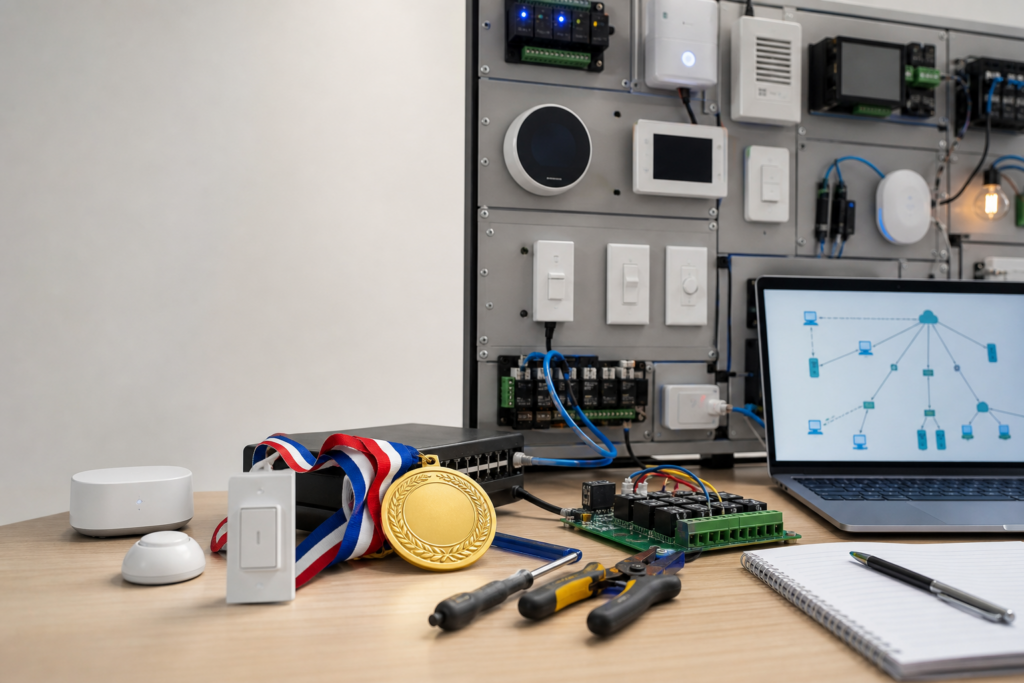
I’m still processing it, honestly. I won Gold at State SkillsUSA in IoT Smart Home.
And now? I’m heading to Atlanta to compete at Nationals.
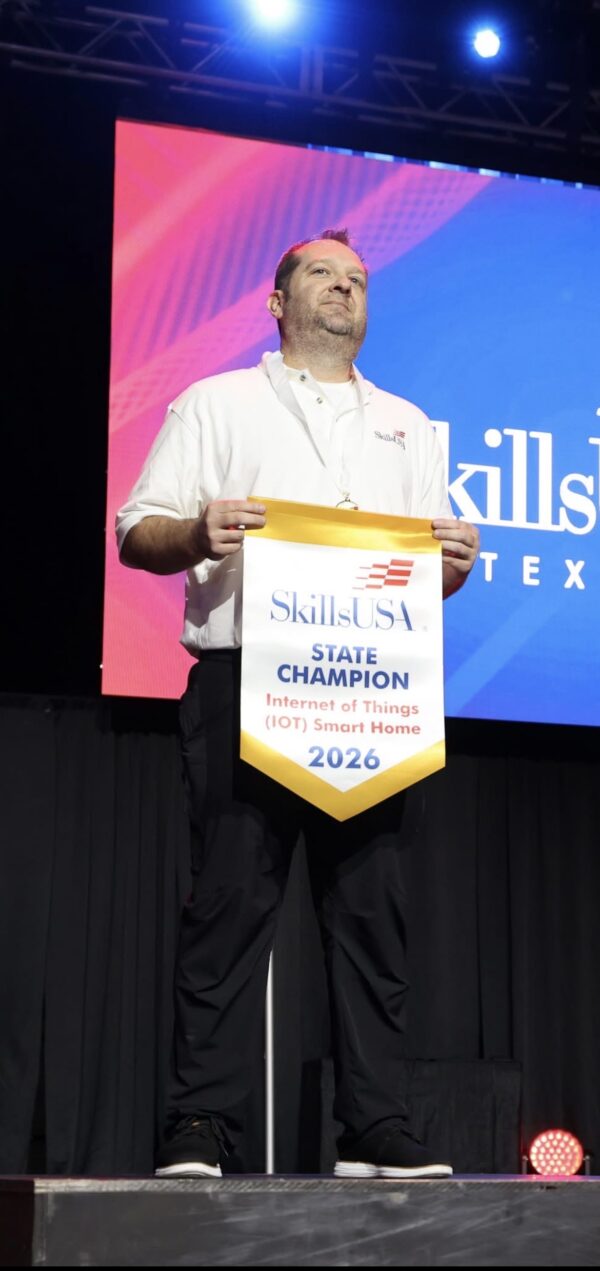 It hasn’t fully sunk in yet. One moment I’m standing there hearing my name called, and the next I’m staring at a calendar realizing I have less than two weeks to get ready for the biggest competition of my life.
What Winning State Felt Like
I’m not going to pretend I was calm. I wasn’t. State-level competition is intense, you’re up against people who have been grinding just as hard as you, and the IoT Smart Home category is no joke. It covers everything from network configuration and smart device integration to HVAC control systems, security automation, and troubleshooting under pressure.
Walking away with Gold validated a lot of the work I’ve been pouring into this. Late nights. Countless labs. Walls of wiring. It told me I’m on the right track, but it also raised the bar significantly.
The Clock Is Ticking
Less than two weeks. That’s what I have to level up before Nationals. The competition in Atlanta is going to be a completely different animal. Competitors from every state, all Gold medalists, all hungry. I need to be sharper, faster, and more confident in every area.
So here’s what I’m doing about it.
Building the IoT Smart Home Simulator
I’ve been building out physical walls and full smart home panels that include HVAC simulators, smart lighting controls, sensor arrays, and everything else you’d find in a modern connected home. These aren’t theoretical exercises. I’m wiring real components, configuring real systems, and troubleshooting real problems.
The goal is to replicate as closely as possible the kind of environment I’ll face on the competition floor. Muscle memory matters. When the clock starts, I don’t want to be thinking, I want to be doing.
If you want to see the project in detail, I’ve been documenting the build here: Smart Home Simulator Project.
Packet Tracer Labs: Smart Home 2.0
The physical build is only half the equation. I’ve also been creating Cisco Packet Tracer labs to simulate a full smart home network environment, what I’m calling Smart Home 2.0. These labs let me practice the networking and IoT integration side of things: VLANs, IoT device registration, controller configuration, and network security.
Packet Tracer is an incredible tool for this because I can build, break, and rebuild scenarios rapidly. I can throw curveballs at myself and practice recovering from misconfigurations under time pressure, exactly the kind of thing that separates a good competitor from a great one.
What’s on My Mind Going Into Nationals
I’d be lying if I said I wasn’t nervous. But it’s the good kind of nervous, the kind that tells you something matters. I’ve earned my spot, and now I owe it to myself to show up fully prepared.
A few things I’m focused on beyond the technical prep:
- Speed and precision — Nationals is timed. Every second counts. I’m drilling until the procedures are automatic.
- Troubleshooting under pressure — Things will go wrong. They always do. I need to stay calm and systematic when they do.
- Documentation habits — Clean, accurate documentation is part of the scoring. I’m tightening up my process now so it’s second nature on competition day.
Follow the Journey
I’ll be sharing updates as I prep and as I compete in Atlanta. If you’ve been following along, thank you, it genuinely means a lot to have people in my corner. If you’re just finding me, welcome. Stick around. This is about to get interesting.
Check out the Smart Home Simulator build, and keep an eye on this space. Nationals, here I come.